SKU: 45156882467
which maxi cosi car seat fits uppababy vista

which maxi cosi car seat fits uppababy vista UPPAbaby Cruz V3 + Aria V2 Travel System

Sale price$21.69 Regular price$24.10
Save 10%

Pay in installments of $6.03 with ShopPay, AfterPay and Klarna

Shipping Estimate
USA
  • USA
  • CAN

Ships within 48 hours · Estimated delivery Jul 22 - Jul 27

Promo Codes Available:

For Your Every Summer RSVP, with Code: SUMMER15

Description

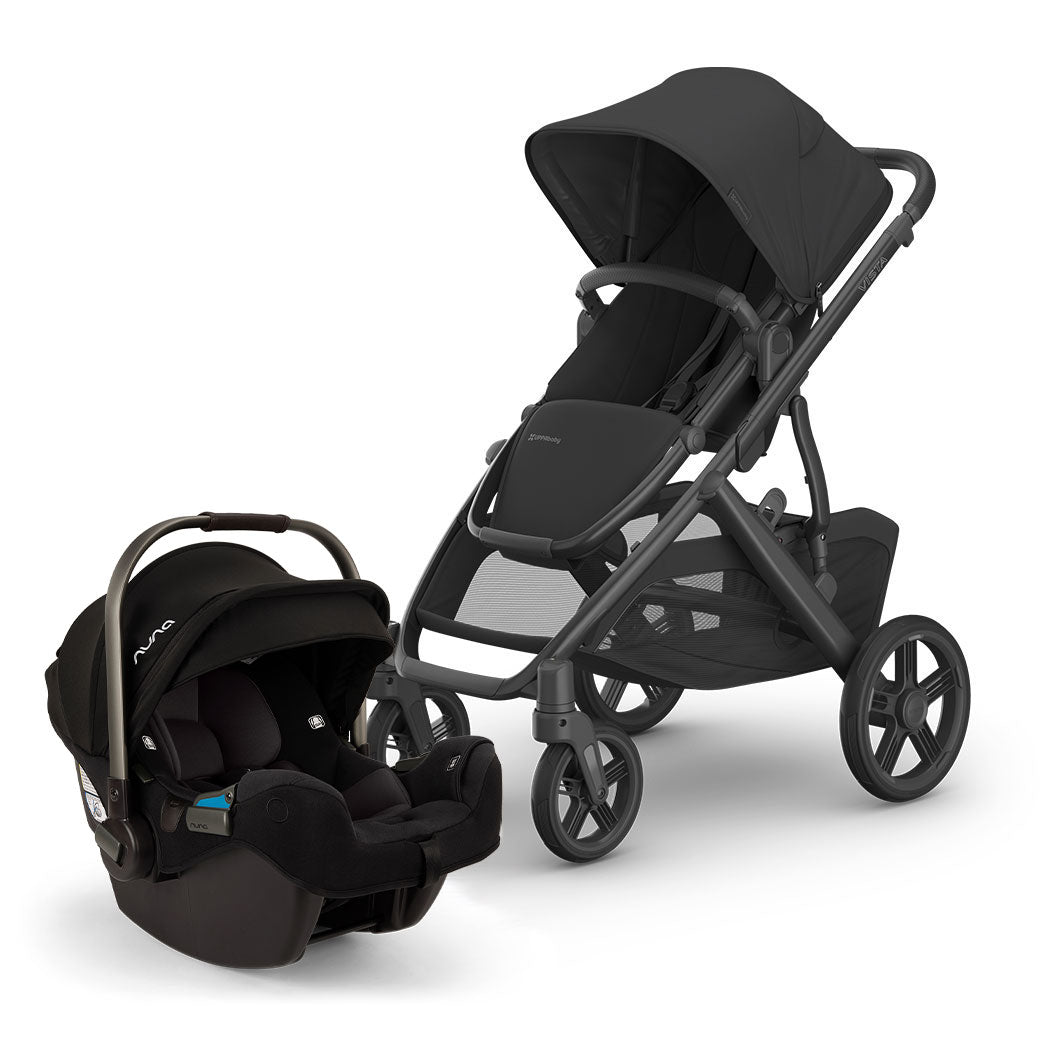
which maxi cosi car seat fits uppababy vista UPPAbaby Cruz V3 + Aria V2 Travel SystemThe UPPAbaby Vista V3 Stroller + Nuna PIPA Series Travel System combines the best of the best UPPAbaby's award winning Vista convertible stroller, an advanced safety PIPA series car seat, and a Nuna PIPA Ring Adapter that allows you to click the car seat in and out of the stroller in one move, with one hand. This bundle comes with everything you need no additional adapters required! Nuna PIPA Series combines the industry's highest standards with low

The UPPAbaby Vista V3 Stroller + Nuna PIPA Series Travel System combines the best of the best - UPPAbaby's award-winning Vista convertible stroller, an advanced-safety PIPA series car seat, and a Nuna PIPA Ring Adapter that allows you to click the car seat in and out of the stroller in one move, with one hand. This bundle comes with everything you need - no additional adapters required!

Nuna PIPA Series combines the industry's highest standards with low chemical emissions to bring a line of car seats that are not only incredibly safe to ride in but also completely non-toxic and safe for the baby's health. All PIPA Series car seats are GREENGUARD Gold certified for low chemical emissions and are made of materials that are naturally fire resistant, without the use of chemical fire retardants. All PIPAs come with a base as well as a removable infant insert for use from birth. Pick your PIPA and you're ready to stroll! Not sure which PIPA is the right one for you? Click here for a comparison chart!

The Vista V3 Stroller is designed to grow with your family and can convert to fit up to three kids with the addition of a RumbleSeat or a PiggyBack. The All-Weather Comfort Seat is reversible so the child can face you or the world, and features a mesh backing that keeps the child cool in warm weather, and a removable padded Seasonal Seat Liner for colder months. The extendable UPF 50+ canopy shields the child from sun rays, and the easy-to-peek window allows you to keep an eye on them while also providing additional airflow. We know that parents' hands are metaphorically and physically always full - this is why you only need one hand to recline the seat for on-the-go naps, and you only need one hand to secure the child in thanks to the no-rethread harness with a magnetic buckle. The adjustable footrest ensures comfort and safety as your little one grows.

The Vista V3 Stroller features an enhanced FlexRide suspension that provides a smooth stroll on any terrain, even with multiple kiddos on board. The one-step self-standing compact fold with the seat attached makes travelling and storage a breeze. The extra-large basket is easy to access from all sides and provides ample storage for your day-to-day necessities on the go. The one-hand handlebar, finished with full-grain REACH-certified leather, is easily adjustable to accommodate different parent heights. Thanks to reflective details on the wheels and the basket, the Vista V3 is visible at all times of day, providing added safety while strolling.

Specifications:

  • Toddler seat and car seat are GREENGUARD Gold-certified for healthier air quality and low chemical emissions, and are free of chemical fire retardants
  • Toddler seat is machine-washable
  • Stroller unfolded dimensions (with seat): 36" L x 25.7" W x 39.5" H
  • Stroller folded dimensions: 17.3" L x 25.7" W x 33.3" H with seat, 13" L x 25.7" W x 32" H frame only
  • Stroller wheels: 8.1" front, 11.3" rear
  • Stroller weight: frame + seat 27 lbs; frame 20 lbs, seat 7 lbs
  • Stroller suitable for use from birth (with bassinet or car seat) or from 3 months, up to 50 lbs
  • Basket capacity: 30 lbs

What's included in the UPPAbaby Vista V3 Stroller + Nuna PIPA Series Travel System:

  • stroller frame
  • toddler seat
  • Seasonal Seat Liner
  • bumper bar
  • toddler seat bug shield
  • toddler seat rain shield
  • storage bag
  • Nuna PIPA Series Car Seat + base
  • Nuna PIPA Ring Adapter

What is the difference between the Vista V2 and the Vista V3? Great question! For a start, for the first time in Vista history, the bassinet no longer comes with the stroller and is now an optional add-on. This brings the price of the stroller down and offers more flexibility to create a system that perfectly fits your lifestyle. Although some families won't have the need for a bassinet, for those that do, the new Bassinet V3 has increased breathability compared to its predecessor, with multiple ventilation panels and an innovative, foam-free mesh mattress. The toddler seat has had a similar improvement, with a mesh All-Weather Comfort Seat and a removable Seasonal Seat Liner, keeping your little one cool in warmer weather and snug in winter months. Thanks to the all-new magnetic buckle, you can easily secure the child with one hand. With more reflective piping for increased safety, improved suspension, and new lightweight tires, UPPAbaby's Vista V3 Stroller is better than ever! Click here for a detailed blog post breaking down all the upgrades.
TL;DR: Increased breathability. Advanced safety. Smoother rides.

Shipping Notes
  • Free Standard Shipping on $100+ Orders to the USA.
  • Except Preorder products are shipped in 48 hours.
  • Delivery to the USA:
  1. Standard Shipping : 3-10 business days
  • If time is of the essence, please consider selecting expedited delivery for faster service.
Exchange/Return Notes
  • We offer a 30-day return/exchange service after receiving.
  • Final sale items are not eligible for returns or exchanges.
  • To process your return/exchange, please contact us at [email protected]
  • Please click here for more details>>> Return & Exchange Policy
SKU: 45156882467

Discover Niche Categories That Outsell which maxi cosi car seat fits uppababy vista

Top-Converting Item to Boost Your Average Order

4.9 ★★★★★
Based on 23 reviews
Sort
Highest Rating
Newest First
Oldest First
Product Reviews
D
Verified Purchase
Diana D
Birmingham, US
★★★★★ 5
Very well written and easy to read.
Format: Paperback
Few people are as qualified as Philip Meyer to write a book on storytelling for lawyers. With a background as a trial lawyer, he has plenty of practical, real-life experience in the courtroom. His approach is not that of an academic giving purely theoretical advice, but that of a seasoned lawyer who knows the ins and outs of the legal profession. His experience as a professor (of both law and writing) has honed his ability to effectively communicate his ideas to a broad audience. Not only is this book helpful for the practicing lawyer, it is also useful and not too complex for the legal neophyte or casual reader. This book breaks storytelling (narrative) down to its core components and analyzes them one by one. In the process of analyzing each part of a story, Philip Meyer skillfully explores each component with a non-legal example (e.g. movies, books, etc.) before applying it to a legal example (e.g. courtroom proceedings, appellate briefs, closing arguments, etc.) By first analyzing each part of a story (i.e. plot, setting, etc.) from a well-known story that resonates with the reader, he sets a strong foundation before transitioning to a legal story, thus making it easy for the reader to identify and better understand each part of the legal story. I highly recommend this book to anyone remotely interested in storytelling and persuasion as they relate to the legal profession.
WAS THIS REVIEW HELPFUL?YesReportShare
Reviewed in the United States on November 22, 2016
J
Verified Purchase
JR
Belleville, US
★★★★★ 4
Must Read for Novice Litigators
Format: Paperback
This book is a great starting point for developing the skill of storytelling for lawyers as was intended by the author. The author gives you the basics for developing the plot, characters, style, setting, and narrative for your trial with excellent examples. The author is a law professor and the book seems geared for the law student or novice lawyers getting into litigation. I only gave the book 4 out of 5 stars because of a couple of minor problems. However, the chapter on narrative needs further exposition and appears to be written in rushed manner. In addition, the physical binding of the book is of poor quality requiring me to glue the cover back on. Finally, the author missed the point that the lawyer's job is to look at his case as a giant puzzle to be solved and then explained as a story.It is not enough to understand your case but equally imperative that you communicate your case which is best done through the storytelling technique. This is a must read for lawyers getting up to speed on litigation. For further exposition on legal storytelling for lawyers after reading Meyer's book on Storytelling for Lawyers, I recommend the following: ABA webinar available with an internet search for "Storytelling for Lawyers"
WAS THIS REVIEW HELPFUL?YesReportShare
Reviewed in the United States on July 25, 2018
T
Verified Purchase
Tahoeman
Natrona Heights, US
★★★★★ 5
Much needed guide to narration in law practice
Format: Paperback
Meyer’s “Storytelling for Lawyers” is an important contribution to the literature on narration in law practice. We know that successful courtroom rhetoric can best be viewed through the prism of storytelling. But the literature does not contain a practical and detailed analysis of the elements of narration as used in law practice—that is, plotting, characterization, point of view, style, and settings in place and time. Meyer’s book fills this gap. It is blessedly free of jargon and full of practical examples of good legal storytelling. But the importance of this book goes well beyond providing practical assistance to litigators. It serves as a much-needed introduction to the principles of narration for teachers and students of literature, creative writing, and popular culture, who have lacked a readable introductory guide to the elements of successful storytelling.
WAS THIS REVIEW HELPFUL?YesReportShare
Reviewed in the United States on February 10, 2014
D
Verified Purchase
David R. Papke
Battle Creek, US
★★★★★ 5
Recommended for All Lawyers
Format: Paperback
Meyer proves his initial point that much of what lawyers do is storytelling, and he achieves his goal of providing a primer on narrative theory for lawyer-storytellers. The book is sophisticated but written in an engaging way using non-technical language. Examples from legal and literary works abound, and they range from courtroom arguments and appellate briefs on the one hand to an essay by Joan Didion and Vonnegut's "Slaughterhouse Five" on the other. Meyer's favorite stories are found in Hollywood movies, and although he seems unaware of the accomplishment,Meyer provides fresh interpretations of such movies as "HIgh Noon" and"Jaws." I strongly recommend "Storytelling for Lawyers" for all law students, lawyers, and judges.
WAS THIS REVIEW HELPFUL?YesReportShare
Reviewed in the United States on May 7, 2014
D
Verified Purchase
DoubtfulReader
Dallas, US
★★★★★ 3
Notes on Legal Style by a Law Professor and Experienced Lawyer.
Format: Kindle
BOOK REVIEW: MEYER, Philip N., Storytelling for Lawyers ISBN: 978-0-19-5396638 Read June, 13th-27th, 2017. This book discusses storytelling tools by presenting a series of examples of good storytelling, both in legal settings and in literary works and movies. If theoretical explanations are sometimes a bit dry, the frequent quoting of practical examples conveys fluidity and speed to the book. After an introduction presenting lawyers as storytellers, it deals with the roles played in storytelling by Plots (chapters 2 and 3); Character (4 and 5); Voice, Perspective, Details and Images, and Rhytm and Speed (which relate to Scene and Summary) (chapter 6); Place or Story Environment (chapter 7) and Narrative Time. Focusing maybe too narrowly on legal storytelling before American juries, plot is almost equated with melodrama. Films like Jaws and High Noon are extensively discussed, as Gerry Spence’s Closing Argument on Behalf of Karen Silkwood. The chapters on character offer interesting insights on character classification (“round” characters, with psychological depth, prone to suffer transformation as the story evolves, vs. “flat” ones), while discussing the tools for telling how a character is, as opposed to simply showing the psychological nature of each character’s character through dialogue or the actions the character performs. Examples include Tobias Wolff’s This Boy’s Life and Jeremiah Donovan’s Closing Arguments on Behalf of Louis Failla, in a 13-week trial the Author could scrupulously attend in person. Discussions on Voice, Perspective, Details and Images, Scene and Summary, criticize the basic assumptions of the neutrality of lawyers’ voices, exemplifies how to manage details to suggest ideas and emotions, draw on the distinction between showing and telling, and offers interesting insights into the narrative theory’s concept of stretch (the slowing of the narrative rhythm in relation to the narrated story’s). Environment depiction storytelling tools deals with Joan Didion’s The White Album and the Judicial Opinion in a Rape Case, quoting also from W. G. Sebald’s The Emigrants and the Petition Briefs in Reck v. Ragen and Miranda v. Arizona. Further examples are Kathryn Harrison’s While They Slept and the Petitioner’s Brief in Eddings v. Oklahoma. Finally, the chapter on Narrative Time draws on Kurt Vonnegut’s Slaughterhouse Five and explores time, rhythm or speed, discussing more deeply stretch and the relation of time of the narrative itself with the time of the facts dealt with in the narrative. Chronology is discussed and criticized; Analepsis or Flashback is didactically explained and exemplified, both in general storytelling theory and in its legal use; the same holds for Prolepsis (Flash-forward) and Ellipsis (the intentional omission of a part of the narrative, often with the purpose of emphasizing the omitted event. Pacing and Rhythm are discussed in more lenght, with the caveat - repeated somewhat throughout the book - that legal stories are often left unfinished by the lawyer, in order to allow the jurors or judges fill the end with their decision. The Author remarks his purpose was to suggest possible tools and ways of dealing with problems which arise in legal storytelling, and he delivers what he promises.
WAS THIS REVIEW HELPFUL?YesReportShare
Reviewed in the United States on June 27, 2017

recommand products