SKU: 59568897637
blue ice plant succulent

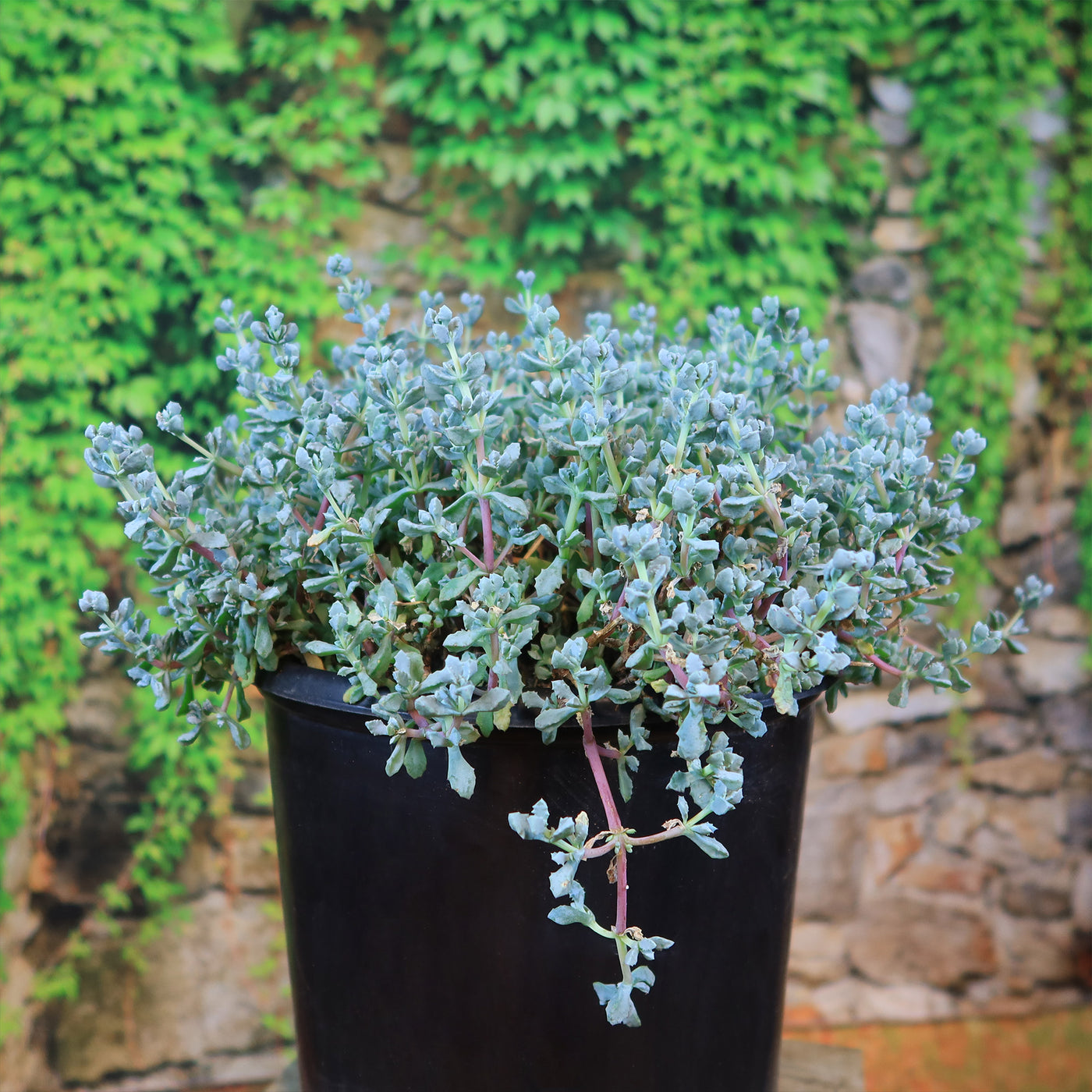
blue ice plant succulent Pink Ice plant Succulent 'Oscularia deltoides' 3 Gal

Sale price$22.88 Regular price$25.42
Save 10%

Pay in installments of $6.36 with ShopPay, AfterPay and Klarna

Shipping Estimate
USA
  • USA
  • CAN

Ships within 48 hours · Estimated delivery Jul 23 - Jul 28

Promo Codes Available:

For Your Every Summer RSVP, with Code: SUMMER15

Description

blue ice plant succulent Pink Ice plant Succulent 'Oscularia deltoides' 3 GalIntroducing the Pink ice plant, known as Oscularia deltoides, which is a trailing succulent with pink flowers. Native to South Africa, this low maintenance succulent makes great ground cover and spreads out, forming a colorful mat, and grows well on the rocky edge. Additionally, this pink ice plant can be grown in pots too. The name "ice plant" refers to tiny hairs on the plant's leaves and stems that reflect light in the same way that ice crystals

Introducing the Pink ice plant, known as Oscularia deltoides, which is a trailing succulent with pink flowers. Native to South Africa, this low-maintenance succulent makes great ground cover and spreads out, forming a colorful mat, and grows well on the rocky edge. Additionally, this pink ice plant can be grown in pots too.

The name "ice plant" refers to tiny hairs on the plant's leaves and stems that reflect light in the same way that ice crystals do. The foliage is fleshy and succulent-like, and it darkens as fall temperatures drop. Although ice plants are cold-sensitive, many varieties are evergreen in warm, dry climates.

Ice plants are used in sunny but sheltered desert gardens, rock gardens, slopes, ground cover, and as edging plants.

It is also known as Lampranthus Deltoides, Deltoid Leaved Dew Plant, Tooth-leaf Rock Vygie, Dassievygie, and Sandsteenvygie.

With its small, plump leaves that boast a mesmerizing blue-green hue, this ice plant is sure to turn heads and add drama to any space.

The three-sided leaves of the ice plant are fat and trailing.  The color becomes more intense as the pink ice plant ages and is exposed to more sunlight. It can grow up to 1 foot tall and 2 feet wide.

The ice plant flowers bloom during the late spring to summer, with bright pinkish-purple and dazzling magenta-pink flowers. They bloom from every nook and cranny until they completely surround and cover the whole plant. This stunning ground covered with pink flowers is closed up in the morning but open, often to cover the plant, in the afternoon. 

The true beauty of this trailing plant is that it can withstand high temperatures and extreme environmental conditions without showing signs of stress. It attracts butterflies.

Leaf cuttings and stem cuttings are the easiest way to propagate these ice plant ground cover. 

When and How to Water Your Ice Plant 

The ice plant is a succulent that prefers well-draining soil and requires watering only when the soil is dry to the touch. Overwatering can cause root rot and other issues that can damage these pink plants. They can be watered year-round and water regularly from spring to Autumn but reduce the watering frequency in winter; the growth period is early Spring to late Summer. 

When watering the pink ice plant, it is important to avoid standing water and to ensure that the soil is able to dry out between watering sessions. The pink ice plant is well-suited to dry climates and can tolerate periods of drought, but it does require a lot of water to thrive. 

Remember, watering should be done at the base of the succulent ice plant rather than from above to avoid getting water on the leaves, which can cause damage or rot. With proper watering and care, the pink ice plant can thrive and produce colorful blooms that are sure to brighten up any garden. 

Light Requirements - Where to Put Ice Plant

Like many other succulents, the ice plant is sun-loving and also requires direct, bright light to thrive.  When grown indoors, place it in the sunniest place in your house. It is ideal to grow this pink flower ground cover in a west- or south-facing window, when it can get 4-6 hours of bright sunlight. 

For outdoor cultivation, these oscularia deltoides require full sun to partial shade for at least 6-8 hours of strong light each day. Although light shade in the afternoon is often preferable - especially in hotter climates where the plant might become stressed by the intense heat of the afternoon sun. It's crucial to place your pink plants away from any areas with constant direct sunlight, as doing so could result in burned foliage. 

Remember, when planting the pink ice plant, it is important to choose a location that receives full sun throughout the day to maintain its colors. It is well-suited to hot and dry climates and can tolerate high temperatures and intense sunlight. 

This pink ice is able to tolerate some shade, but it may not produce as many blooms in areas with less sunlight or in too much shade. With proper light and care, the pink ice plant can thrive and produce beautiful blooms that are sure to add color and interest to any garden or landscape. 

Optimal Soil & Fertilizer Needs 

The ice plant favors very airy, sandy soil that drains well. Planting them in ordinary soil will result in compacted roots, stunted growth, and, most likely, root rot. Instead, make or buy a well-draining potting mix, or ideally, use our specialized potting mix that contains 5 natural substrates and mycorrhizae to promote the development of a strong root system that helps your succulent to thrive. 

When it comes to fertilizer, the pink ice plant does not require a lot of additional nutrients. In fact, too much fertilizer can cause the plant to produce excessive foliage at the expense of blooms. A slow-release natural fertilizer with an equal mix of NPK (5-10-5) can be applied once a year in the spring to help provide the plant with the nutrients it needs to thrive. Care should be taken to avoid over-fertilizing the succulent plant, as this can lead to issues with growth and blooming. 

With proper soil and fertilizer, the ice flower plant can thrive and produce beautiful blooms that are sure to add color and interest to any garden or landscape. 

Hardiness Zones & More 

When growing indoors, it should be kept between 65-75 degrees Fahrenheit to ensure optimal growth. The requirements are fairly flexible, as it can tolerate a wide range of temperatures. However, it is best to keep it in a warm environment with plenty of sunlight to encourage healthy growth.

For outdoor cultivation, this hardy ice plant is suitable outdoors in USDA zones 8-11, making oscularia deltoidesa a versatile plant that can be grown in a variety of climates. However, it is important to ensure that the succulent plants receive enough water to prevent issues with dehydration. 

The ice plant is able to tolerate mild frost, but it may struggle in areas with prolonged periods of frost or freezing temperatures. The best way to grow these pink ground covers is in containers, especially for those who live in regions with harsh winters.  

When it's cold outside, or there is a chance of snow or frost, you can then bring them inside. There are ways to keep your pink ice plant succulent safe from the cold if you are unable to bring it inside.To help them endure the harsh winter, you can use frost cloths or tiny greenhouses. 

Final Thoughts

Overall, the Pink Ice plant Succulent (Oscularia deltoides) is a beautiful and low-maintenance plant that adds a pop of color to any garden or indoor space. With its unique triangular-shaped leaves and ability to thrive in dry conditions, it is an excellent choice for beginner gardeners or those looking to add a touch of vibrancy to their collection. Remember to provide well-draining soil, ample sunlight, and occasional watering to keep this succulent happy and healthy.

Be sure to add Oscularia deltoides - Pink ice plant, to your collection today and elevate the beauty of your home or garden with this stunning-looking plant.

Shipping Notes
  • Free Standard Shipping on $100+ Orders to the USA.
  • Except Preorder products are shipped in 48 hours.
  • Delivery to the USA:
  1. Standard Shipping : 3-10 business days
  • If time is of the essence, please consider selecting expedited delivery for faster service.
Exchange/Return Notes
  • We offer a 30-day return/exchange service after receiving.
  • Final sale items are not eligible for returns or exchanges.
  • To process your return/exchange, please contact us at [email protected]
  • Please click here for more details>>> Return & Exchange Policy
SKU: 59568897637

Discover Niche Categories That Outsell blue ice plant succulent

Top-Converting Item to Boost Your Average Order

4.0 ★★★★★
Based on 22 reviews
Sort
Highest Rating
Newest First
Oldest First
Product Reviews
L
Verified Purchase
L. Higgins
Alexandria, US
★★★★★ 5
Successful Epistolary Novel
Format: Kindle
When we first meet Sybil Van Antwerp, age 73, she is retired from law and spends a lot of time writing letters and emails. She also reads a lot and is interested in what her correspondents are reading. She has children and grandchildren, but she lives alone in Annapolis, Maryland, and doesn’t see her family very often. During the course of reading her correspondence, we very gradually learn about Sybil—her history and her present troubles. She is a complicated character and several times in reading The Correspondent I paused to ask myself what I thought of Sybil—did I like her? What about her kept me from the immediate response a reader usually has about the main character of a book? Even at the end of the book, I am still ambivalent about Sybil, but I certainly understand her much better. Sybil, herself, and the book have so many layers. There is true depth to the story. My book club took deep dives into it over a period of three weeks, and I don’t think we have sampled all the topics represented in this book. It is a wonderful novel for stimulating meaningful discussion. Neurodivergence is not called out or named, but it comes to mind in thinking about Harry, a child who is the son of a judge, a former colleague of Sybil. The boy doesn’t quite fit in socially with his peers, but he is brilliant. Sybil makes the perfect “pen pal” for Harry because they have some of the same characteristics. As a child she was punished for “insolence and rudeness,” but her parents were just trying to mold her into a polite young lady as expected by society. She was blunt and didn’t have many friends. There are so many other issues worthy of discussion, but they would most certainly bring up spoilers. I won’t do that to you. Readers should have the opportunity to see the story gradually emerge from the letters, including a continuing one that the reader doesn’t know to whom Sybil is writing. Sybil sets the word “stone” for secrets, and there are stones in this book making it a puzzle, a mystery of sorts—for the reader. As a reviewer, I tend to go quickly from one book to the next as soon as I have composed and published my thoughts. Characters in various books can even blend together. This is not the case with The Correspondent. The characters in this book, especially Sybil, have stayed with me and come to mind frequently as I go through my day. Virginia Evans has created a fictional world with impact. Just as Sybil needed time (years in her case) to process the events of her life, the reader will need time to process them and their effects on Sybil as well.
WAS THIS REVIEW HELPFUL?YesReportShare
Reviewed in the United States on March 15, 2026
S
She Treads Softly
Massapequa, US
★★★★★ 5
exceptional, very highly recommended character-driven literary family drama
Format: Kindle
Whistler by Ann Patchett is an exceptional, very highly recommended character-driven literary family drama which will definitely be one of the best books I've read this year. In Whistler Patchett has given us a beautifully written, eloquent, insightful and sensitive story encompassing the complexity of families, connections, and relationships over time. I love everything about this book. As they were visiting the Metropolitan Museum of Art, Daphne Fuller's retired husband Jonathan notices an older man following them and they discover he is Eddie Triplett, Daphne's former stepfather. She hasn't seen him for 44 years but immediately remembers her love for him and the bond they had for a couple years. The two also shared a traumatic experience when she was nine and they were in a car accident. Immediately after this Daphne's mother divorced Eddie and he disappeared from her life. After this chance meeting and reconnection, Daphne immediately and understandably needs to see and tell her younger sister, Leda, about it. The sisters had a complicated childhood that Daphne never felt was very happy. Daphne and Leda's biological father, Buddy Zabriskie, was a deep-sea fisherman and left the family early, although the girls had a relationship with him. Then their mother married Eddie and both girls loved him for the brief time he was in their lives. Their third and final stepfather, Lucas Ekker, still lives with her mother in Massachusetts and they had two sons. The two sisters were done with stepfathers at this point. As the narrative unfolds, Daphne and Eddie continue to meet and restore their relationship as father and daughter, but now as adults. While following the present day events, Interstitial chapters jump back in time when Eddie was her stepfather and cover the events from when they were in the car accident. It is during these interludes back in time that were learn the story of Whistler and also see the deep connection between Eddie and Daphne. Events in both the past and present show how complicated interpersonal relationships are, how little we truly understand of our past, and, ultimately, how fragile life can be. Because this is a character-driven story, all the characters are portrayed as realistic, fully realized individuals with strengths and weaknesses. The narrative examines relationships, choices made in both the past and present and how many seemingly small and inconsequential moments can follow us our whole lives. It also gently shows how being recognized and understood by another person, even for a short period of time, can change your life and theirs. Whistler by Ann Patchett is a wonderful choice for everyone who enjoys thoughtful, sensitive, character-driven literary novels. Thanks to HarperCollins for providing me with an advance reader's copy via Edelweiss. My review is voluntary and expresses my honest opinion.
WAS THIS REVIEW HELPFUL?YesReportShare
Reviewed in the United States on June 2, 2026
H
H. Smith
Boise, US
★★★★★ 4
Another good Patchett book
Format: Kindle
Thanks go to the publisher and Netgalley for an advance copy of Whistler. I enjoyed this book. The story and characters, and references the the publishing world. I wanted to like it (at a 5 star level) more than I did. But overall, a good read.
WAS THIS REVIEW HELPFUL?YesReportShare
Reviewed in the United States on June 2, 2026
M
Mary Lins
Chelsea, US
★★★★★ 5
Wonderful, Gripping, Suspenseful, and Miraculous!
Format: Hardcover
The first thing I thought when I started reading Ann Patchett’s new novel, “Whistler” was: “Oh no, this is SO GOOD it’s going to go by too quickly!” I was right, and the only remedy to that is to read it again – it’s that great. Patchett has created a matryoshka doll of a novel with a story inside of a story inside of story, and they are ALL wonderful, gripping, suspenseful, and miraculous! The inciting incident that sets off the story takes place in the Metropolitan Museum of Art in NYC. As Daphne and her husband Jonathan take in the art, Jonathan notices that they are being followed by an older man who turns out the be Daphne’s former stepfather, Eddie, whom she hasn’t seen in 44 years (since she was nine) but who was pivotal in how her life unfolded. Through the narrative, Daphne, and her sister Leda, relive long forgotten memories from their brief but impactful time with Eddie, now understanding what they couldn’t as children. Patchett has written about blended families, divorce, and stepparenting before, in her wonderful 2016 novel “Commonwealth”, and in some of the personal essays about her own childhood. So, she knows what she’s talking about! Patchett beautifully evokes childhood nostalgia and skillfully portrays the way the past can sometimes seem more immediate than the present, highlighting reconnection, reconciliation, and grace. Thank you yet again, Ann; this was just the book I needed right now!
WAS THIS REVIEW HELPFUL?YesReportShare
Reviewed in the United States on June 2, 2026
V
V. Rock
Dallas, US
★★★★★ 5
One of Ann Patchett’s best novels.
Format: Hardcover
“Whistler,” by Ann Patchett, Harper, 320 pages, June 2, 2026. Daphne and Jonathan Fuller are visiting the Metropolitan Museum of Art when Jonathan notices an older man following them. They go up to the next floor and the man is still following them. It turns out he is Eddie Triplett, Daphne’s former stepfather, who was married to her mother for a little more than year when Daphne was nine. They haven’t seen each other in almost 45 years, but he recognizes her. It is a chance meeting. Daphne teaches literature at a private school and Jonathan is a retired hospital administrator. Eddie is an editor at Random House, but he wasn’t at the office this day because of a water main break. Daphne visits her sister, Leda, to tell her about the encounter. Flashback to 1980, when Leda was having an appendectomy, Eddie was driving Daphne to the hospital in a snowstorm and they were in an accident. Daphne had to climb out of a car window and walk for help. After that, her mother divorced Eddie. Of course, there’s more to what happened. This is a wonderful story about adults looking back at the choices they’ve made and the choices that others made for them. It is about the small things that impact our lives and memories of childhood. It is about families, love and bravery. This is one of Ann Patchett’s best novels.
WAS THIS REVIEW HELPFUL?YesReportShare
Reviewed in the United States on June 2, 2026

recommand products